Français
 English
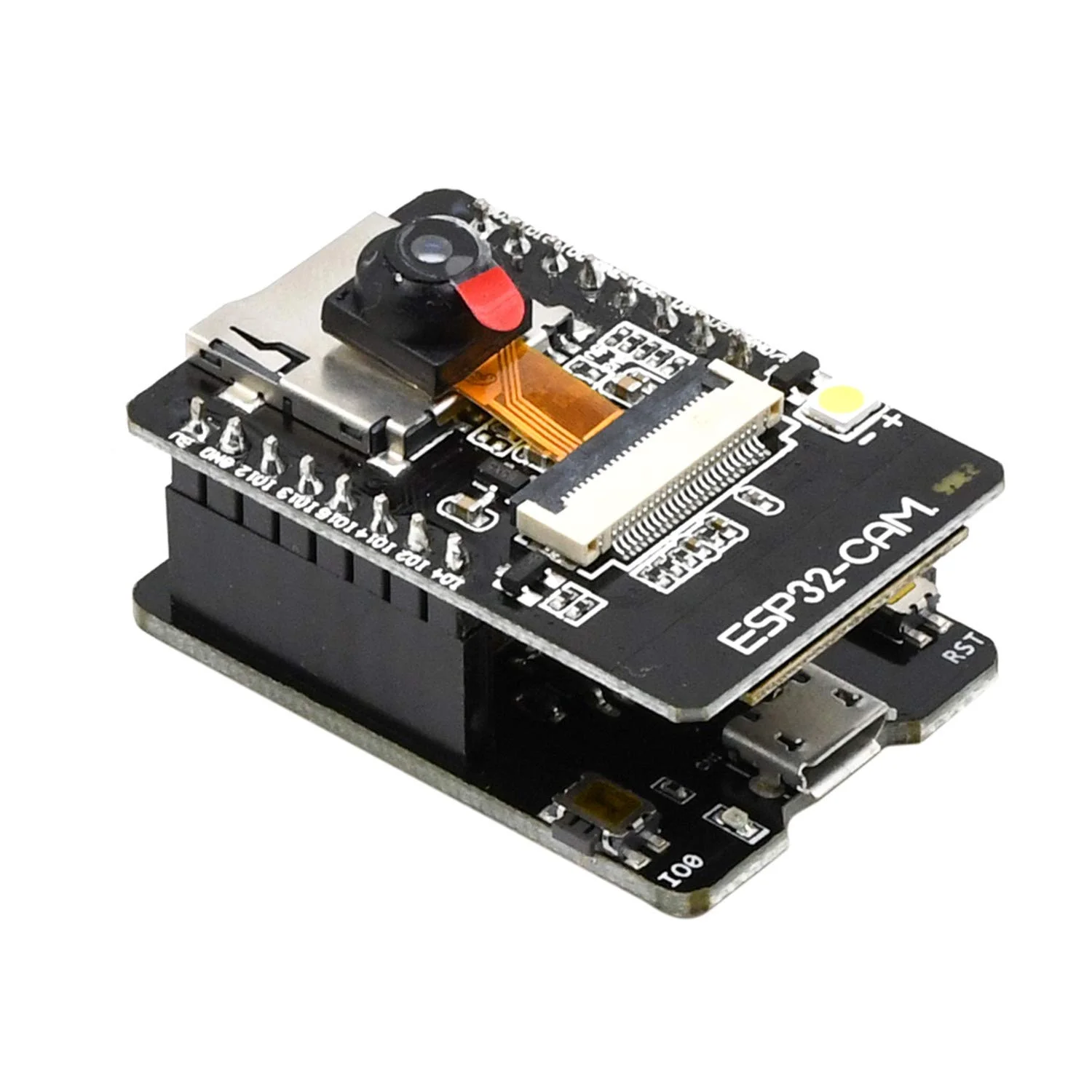
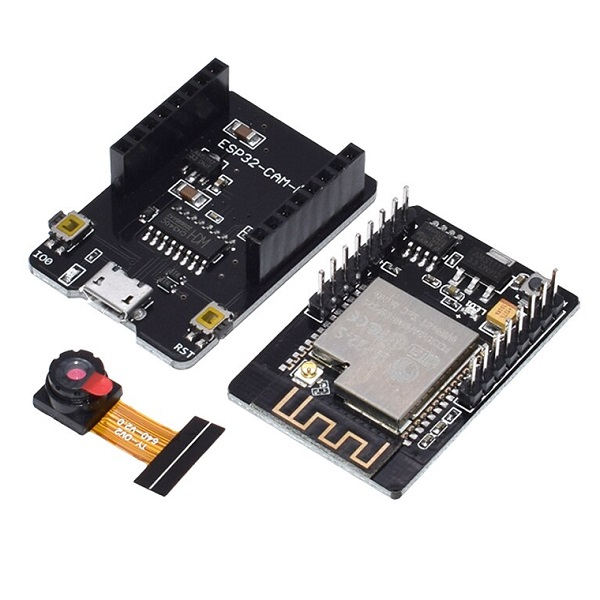
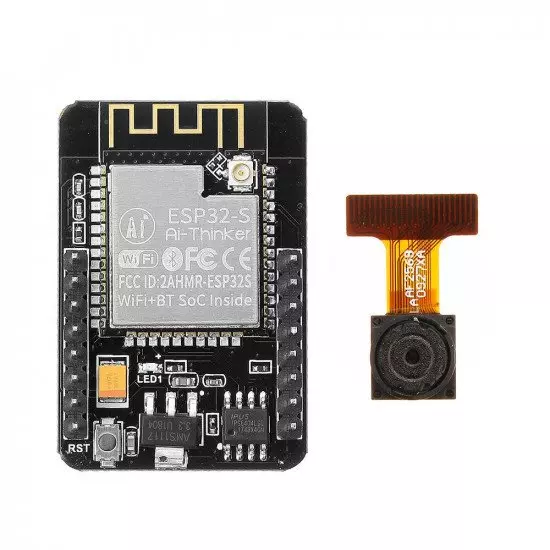
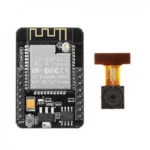
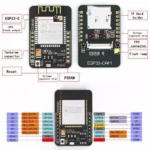
ESP32-CAM-MB WIFI ESP32 CAM Bluetooth Development Board with OV2640 Camera MICRO USB to Serial Port

The ESP32-CAM is an ESP-WROOM-32 development board from AI Thinker, paired with a 2MP OV2640 color camera. The ESP32-CAM module also features an SD card reader that can be used to record images when an event is detected (e.g., presence or motion detector).
3.600,00 DA
The ESP32 CAM is a development board based on the dual-core ESP32 dual-mode WiFi + Bluetooth microcontroller.
This board is equipped with:
-ESP32 chip
-OV2640 Camera: This is a 2MP camera with a resolution of 1600×1200. It can provide full, downsampled, scaled, or windowed 8-bit/10-bit images in a wide range of formats.
-MicroSD card support: The board supports SD cards up to 4GB. It is used to store images or files.
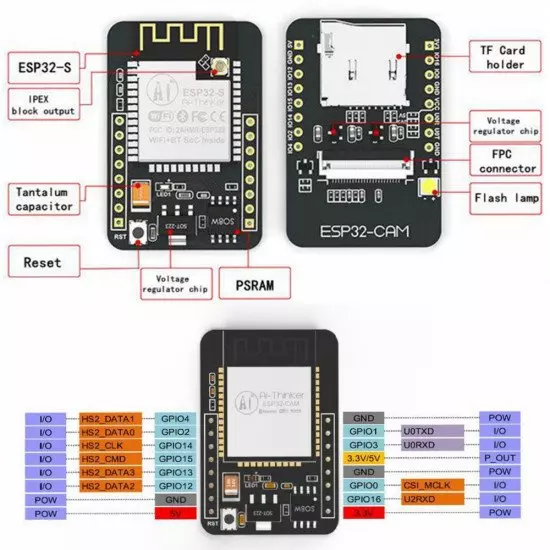
The ESP32-CAM contains the following pins:
-Two I2C interfaces: Used for connecting the chip to other peripherals.
-Two I2S interfaces: Used primarily to transmit or receive audio data. Two DACs: This is an analog-to-digital converter (converts voltage into bits that the chip can understand).
-Three UART interfaces: These are used for programming and communicating with the PC to download code. Two RX receive pins and one TX transmit pin.
-Reset: This is used to reset the chip.
-GND: This is connected to ground.
-Built-in flash: This is a very bright built-in LED that can function as a flash when taking photos.
-Two power pins: 3.3V and 5V.
Its applications:
-Take and send photos via email (you can use SMPT for this project).
-Build a surveillance camera.
-Facial recognition and detection.
-Industrial product counter.
-Industrial wireless surveillance.
-Smart devices.
-Smart agriculture.
-QR code scanner.
-Smart doorbell.
-Home automation.
-Drones.
ESP32 TECHNICAL SPECIFICATIONS
-Wi-Fi 802.11b/g/n/e/i + Bluetooth 4.2.
-Microprocessor: ESP32.
-Power supply range: 5V.
-Low-power 32-bit dual-core processor.
-Onboard 520 KB SRAM, external 4MB PSRAM.
-Supports interfaces such as UART/SPI/I2C/PWM/ADC/DAC.
-Supports OV2640 cameras with built-in flash.
-Supports images uploaded via Wi-Fi.
-Supports multiple sleep modes.
-Supports micro SD cards.
-Flash memory: 4MB.
-Supported video formats: JPEG.
-Built-in LWIP and FreeRTOS.
-Supports STA/AP/STA+AP operating modes.
-Supports Smart Config/AirKiss one-click distribution network.
-Supports local serial upgrade and remote firmware upgrade (FOTA).
-Board size: 40x27x12mm.
-Weight: 10g.
| Marque | Arduino |
|---|
Produits connexes
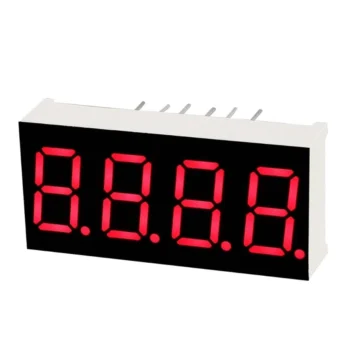
0.56 inch 4 Digit 7 Segment LED Display Red Clock 12 Pin Common Cathode Digital Display


The HW-201 IR infrared obstacle detection module can detect obstacles within a distance range of 2 cm to 30 cm, with a detection angle of 35 degrees.
It can operate with a supply voltage of 3.3 V to 5 V and has a maximum current consumption of 100 mA. The module outputs a digital signal, high when an obstacle is detected, low when no obstacle is detected.
The infrared LED has a wavelength of 940 nm and an operating frequency of 38 kHz. The module operates at temperatures between -25 °C and +55 °C.
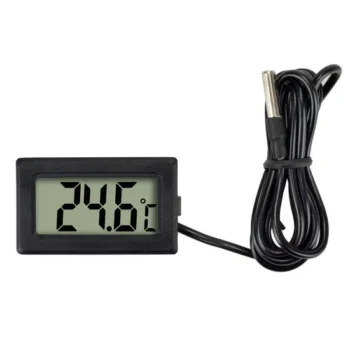
Ardess Digital Mini Thermometer with cable allows you to easily and fast know the environment temperature around you anywhere
The thermometer comes with 1m cable metal sensor probe, perfect for use in refrigerator, aquarium tank, fish tank,pet cage, kitchens,3D printer, solar system, cellar,humidors, incubator or any other places that require monitoring of temperature.
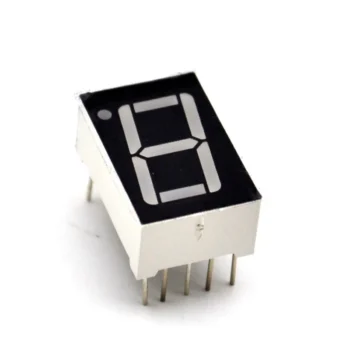
Seven-segment display (5611AH):
- The 7-segment displays consist of a series of LEDs placed to form numbers.
- A 7-segment display allows you to view the digits from 0 to 9.
- Typical voltage: 2.2v / Current per segment max: 30mA


High-capacity brushless motor, maximizes equipment power and extends service life and reduces the risk of breakdowns. This motor is commonly used in industrial applications, comfortable and quite simple in its use, as well as its energy consumption is low.
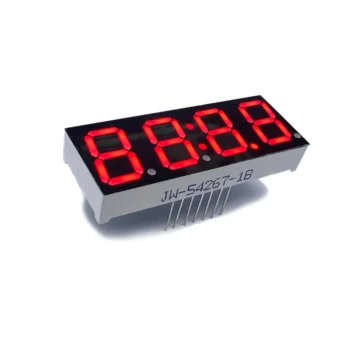
0.56 inch Red 4 Digit 7 Segment LED Display CC 12pin


The Arduino Mega 2560 is a microcontroller board based on the ATmega2560. It has 54 digital input/output pins (of which 15 can be used as PWM outputs), 16 analog inputs, 4 UARTs (hardware serial ports), a 16 MHz crystal oscillator, a USB connection, a power jack, an ICSP header, and a reset button.
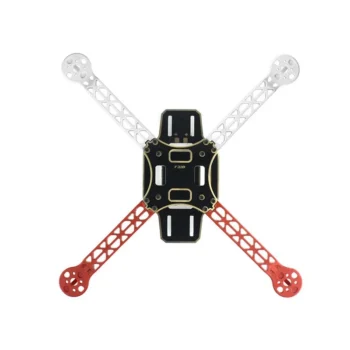
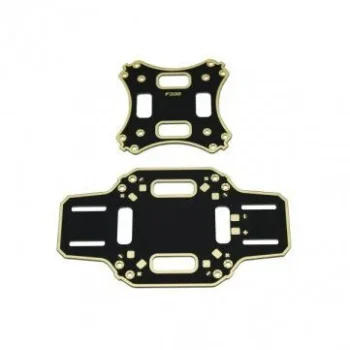
- Wheelbase: 330mm
- Material: Glass Fiber + Polyamide-Nylon
- Moter Mounting Hole Diameter: 3 mm
- Arm Size: 155×34 (LxW) mm
- Weight: 160 gm