 Français
 English
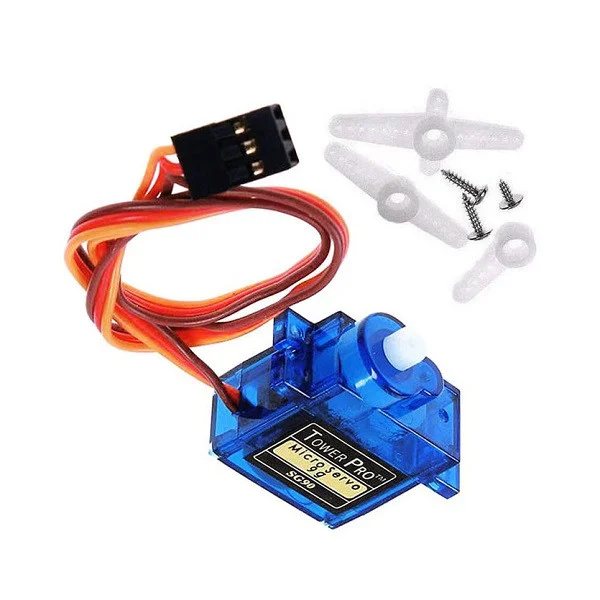
SERVO MOTOR SG90 9G FOR RC ROBOT
The SG90 servo motor is a type of continuous rotation motor controlled by a digital signal. It is used in projects such as robotics, position control systems, and DIY projects.
750,00 DA
- del: SG90
- Weight: 9 gm
- Operating voltage: 3.0V~ 7.2V
- Servo Plug: JR
- Stall torque @4.8V : 1.2kg-cm
- Stall torque @6.6V : 1.6kg-cm
t equips Carbon Fiber Gears which makes the servo motor much lighter than the same metal gear motor. For small load applications using the metal gear, servo motor adds on unnecessary weight, so we suggest using these lightweight plastic gear servo motors.
The TowerPro SG90 9g Mini Servo is a 180° rotation servo. It is a Digital Servo Motor that receives and processes PWM signal faster and better. It equips sophisticated internal circuitry that provides good torque, holding power, and faster updates in response to external forces.
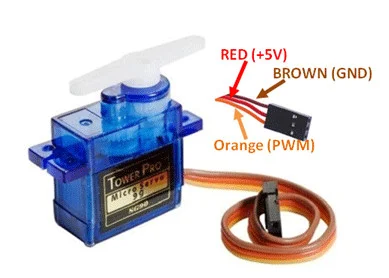
Wire Description
RED – Positive
Brown – Negative
Orange – Signal
We are selling the wide range of Servo Motors with variable specs and quality material, Check them now
Servo Motors and Accessories
Features :
- High resolution
- Accurate positioning
- Fast control response
- Constant torque throughout the servo travel range
- Excellent holding power
Produits connexes


The HW-201 IR infrared obstacle detection module can detect obstacles within a distance range of 2 cm to 30 cm, with a detection angle of 35 degrees.
It can operate with a supply voltage of 3.3 V to 5 V and has a maximum current consumption of 100 mA. The module outputs a digital signal, high when an obstacle is detected, low when no obstacle is detected.
The infrared LED has a wavelength of 940 nm and an operating frequency of 38 kHz. The module operates at temperatures between -25 °C and +55 °C.
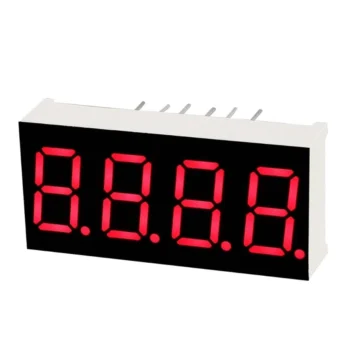
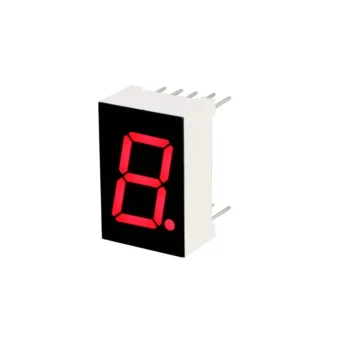
0.56 inch 4 Digit 7 Segment LED Display Red Clock 12 Pin Common Cathode Digital Display

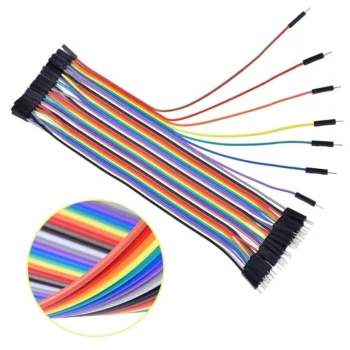
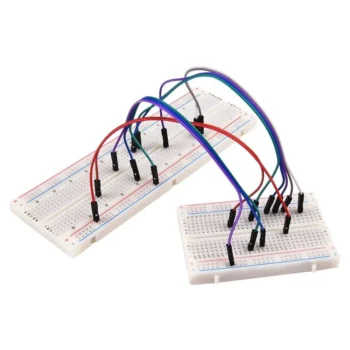
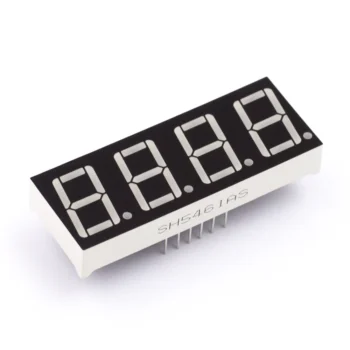
4 Digit 0.56 inch 7 Segment 4 Bit Red LED Digital Display Module Tube with Clock Point for Arduino


Transceiver module based on an NRF24L01 allowing a 2.4 GHz wireless connection. This module communicates with an Arduino or compatible microcontroller via the SPI bus.
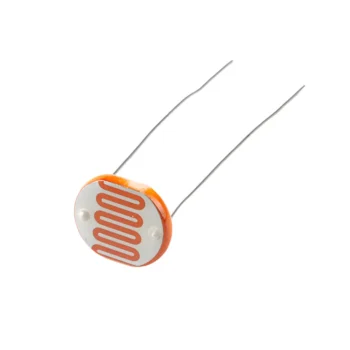
5mm 5537 LDR is a 5mm light-dependent resistor with a « 5537 » model number, which is a photosensitive component that changes its electrical resistance based on the intensity of ambient light. Its resistance is high in darkness and decreases as light increases, making it useful for light-sensitive applications like automatic lighting systems, alarms, and light-level detection.
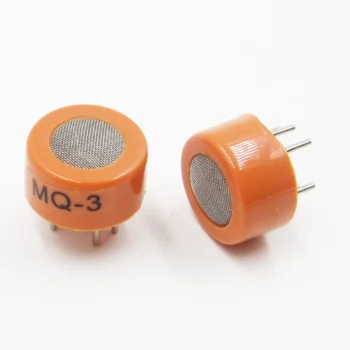
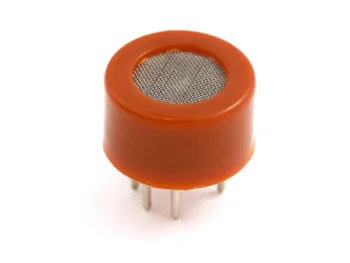
The MQ3 analog gas sensor is suitable for detecting alcohol; this sensor can be used in a breathalyzer.
It has high sensitivity to alcohol and low sensitivity to gasoline.
The sensitivity can be adjusted using a potentiometer.


The Arduino Mega 2560 is a microcontroller board based on the ATmega2560. It has 54 digital input/output pins (of which 15 can be used as PWM outputs), 16 analog inputs, 4 UARTs (hardware serial ports), a 16 MHz crystal oscillator, a USB connection, a power jack, an ICSP header, and a reset button.
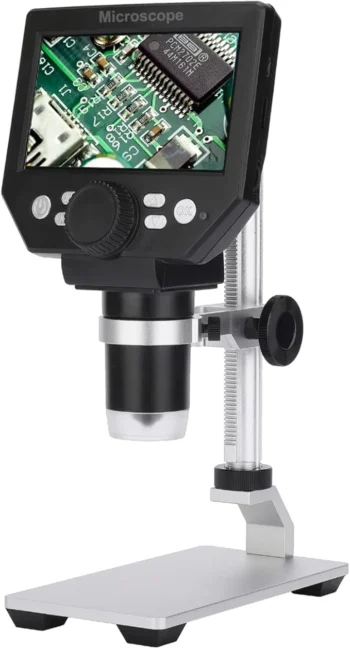
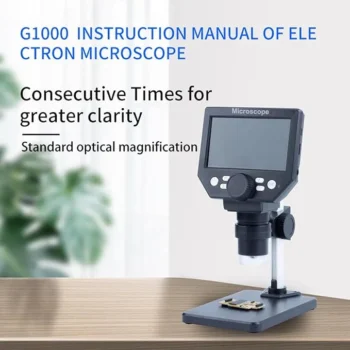
- Magnification: Up to 1000X for fine details.
- LCD Screen: Large 4.3-inch screen for clear viewing.
- Resolution: 10MP for sharp, detailed images.
- LED Light: Built-in light for better visibility.
- Versatile: Ideal for observing various samples.
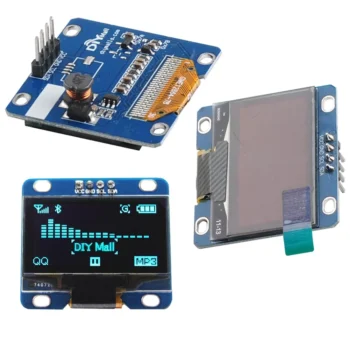
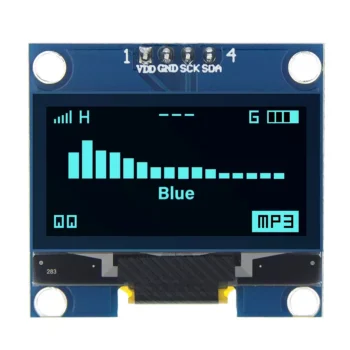
1.3-inch OLED display module with a 128×64 pixel resolution and a blue monochrome screen. It uses an I2C/IIC interface for communication, requires a 4-pin connection, and is compatible with 3.3V to 5V microcontrollers like the Arduino. Key features include high brightness, self-emission (no backlight needed), high contrast, low power consumption, and a wide viewing angle
