 English
 Français
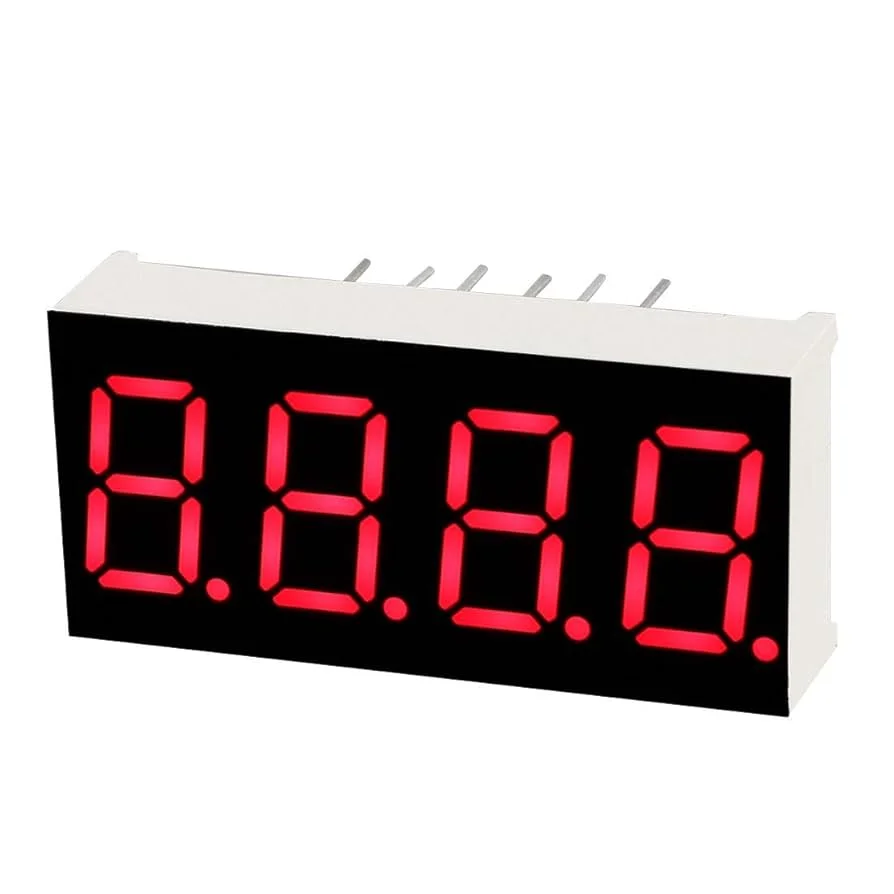
0.56 inch 4 Digit 7 Segment LED Display CC RED (5461AS)
0.56 inch 4 Digit 7 Segment LED Display Red Clock 12 Pin Common Cathode Digital Display
- Model Number : 5641AS
- Usage : Indoor
- Tube chip color : Red
- Type By Hiwor : I07 LED Digit Display
Related Products
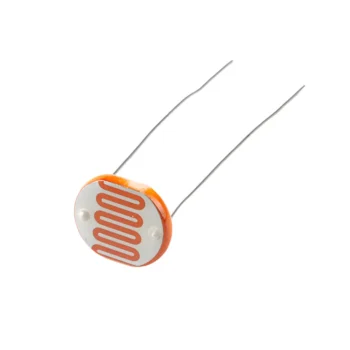
12mm 12528 LDR is a type of photoresistor with a 12mm diameter and the model number GL12528, which changes its resistance based on the intensity of light it is exposed to. The resistance of the component is high in the dark and drops significantly as light increases, making it useful for detecting ambient light levels
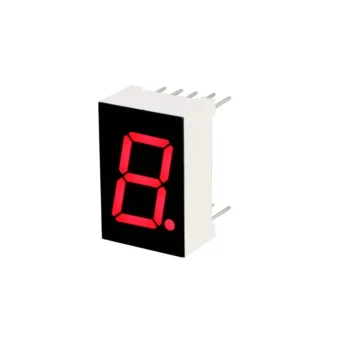
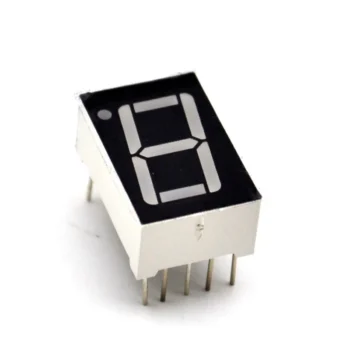
Seven-segment display (5611AH):
- The 7-segment displays consist of a series of LEDs placed to form numbers.
- A 7-segment display allows you to view the digits from 0 to 9.
- Typical voltage: 2.2v / Current per segment max: 30mA
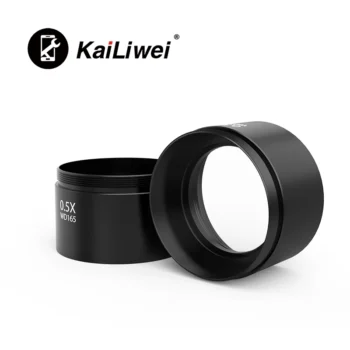

The Arduino UNO is the best board to get started with electronics and coding. If this is your first experience tinkering with the platform, the UNO is the most robust board you can start playing with. The UNO is the most used and documented board of the whole Arduino family.


The HW-201 IR infrared obstacle detection module can detect obstacles within a distance range of 2 cm to 30 cm, with a detection angle of 35 degrees.
It can operate with a supply voltage of 3.3 V to 5 V and has a maximum current consumption of 100 mA. The module outputs a digital signal, high when an obstacle is detected, low when no obstacle is detected.
The infrared LED has a wavelength of 940 nm and an operating frequency of 38 kHz. The module operates at temperatures between -25 °C and +55 °C.
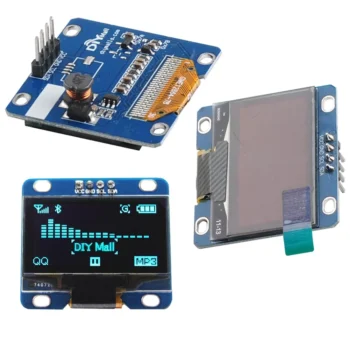
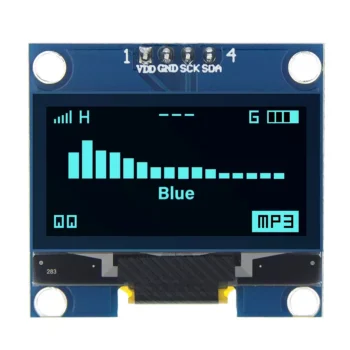
1.3-inch OLED display module with a 128×64 pixel resolution and a blue monochrome screen. It uses an I2C/IIC interface for communication, requires a 4-pin connection, and is compatible with 3.3V to 5V microcontrollers like the Arduino. Key features include high brightness, self-emission (no backlight needed), high contrast, low power consumption, and a wide viewing angle

Arduino Nano has enough processing power to control many electronic components. It has several I/O pins, which allows to connect it to many components. , it is a compact and reduced version of Arduino uno maroc.
Arduino Nano has 14 digital inputs/types (6 of which can be used as PWM outputs), 8 analog inputs.
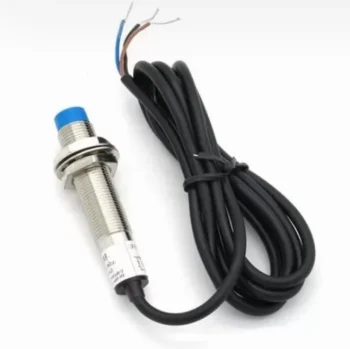
The “LJ12A3-4-Z/BX” is an inductive proximity sensor that detects metal objects within a 4mm range. It operates on a DC 6-36V power supply and has an NPN (Normally Open) digital output, meaning it completes a circuit to the signal line when it detects metal. These sensors are used in industrial automation for non-contact switching, control, and detection
5mm 5537 LDR is a 5mm light-dependent resistor with a “5537” model number, which is a photosensitive component that changes its electrical resistance based on the intensity of ambient light. Its resistance is high in darkness and decreases as light increases, making it useful for light-sensitive applications like automatic lighting systems, alarms, and light-level detection.
